

The language course which sells out in ten minutes
It once caused suspicion in a paranoid London, but now there's a proud revival
For this week’s longer read on NewJournal+, Finn Logue looks at a rising interest in learning Gaeilge in north London.

WHEN the webpage goes up, the places sell out in under 10 minutes. There are waiting lists of over 3,000 people.
This is not the queue for a Glastonbury ticket at Worthy Farm, or even another lucrative, stadium-filling Oasis tour. This is for places at the London Irish Centre’s Scoil na Gaeilge (Irish language school), one of the fastest growing language programmes in the UK.
The London Irish Centre turned 70 last year, and in the seven decades it has existed, it has held some form of Irish language lessons.
But the recent high demand for a spot on the courses has been unprecedented, according to those who oversee the programme.
Rebecca Dorothy, the London Irish Centre’s Cultural and Education Officer, said that the skyrocketing enthusiasm for the Gaeilge classes was part of a wider ‘Celtic Revival’, both in Ireland and England, as people have ramped up their interest in engaging with Irish culture.
She said: “It’s interesting to see the crowd that we get in here for our Irish language classes. On the one hand, you have the younger group of people who are 25-35, who maybe have just moved over recently and want to connect with their community or life back home.
“But on the other hand, at some of our events and classes, there’s the older group of Irish people who have been living here for decades. Many of them didn’t get the opportunity to learn Irish because they moved over here so young looking for work. Or, maybe they did, but they have forgotten it – these classes give them a chance to reconnect with their childhood and reengage with home.”
“We’re also finding about 40 per cent of our language class sign ups are second-generation Irish people who are taking an interest in their heritage and building a community around the language.”
Ms Dorothy added that she felt there was a political motivation behind the rise in Irish, and that speaking the Irish language mattered so much because of the darker chapters in the history of Ireland.
She said: “We were so suppressed as a nation. We were colonised and occupied for over 800 years. The language was literally taken away from us, it was illegal to speak it. It was literally beaten out of kids in schools. You were not allowed to speak your own mother tongue.
“So I think it’s like, it’s so significant now because people are saying ‘no, this is ours’ and we are making it our own again.”
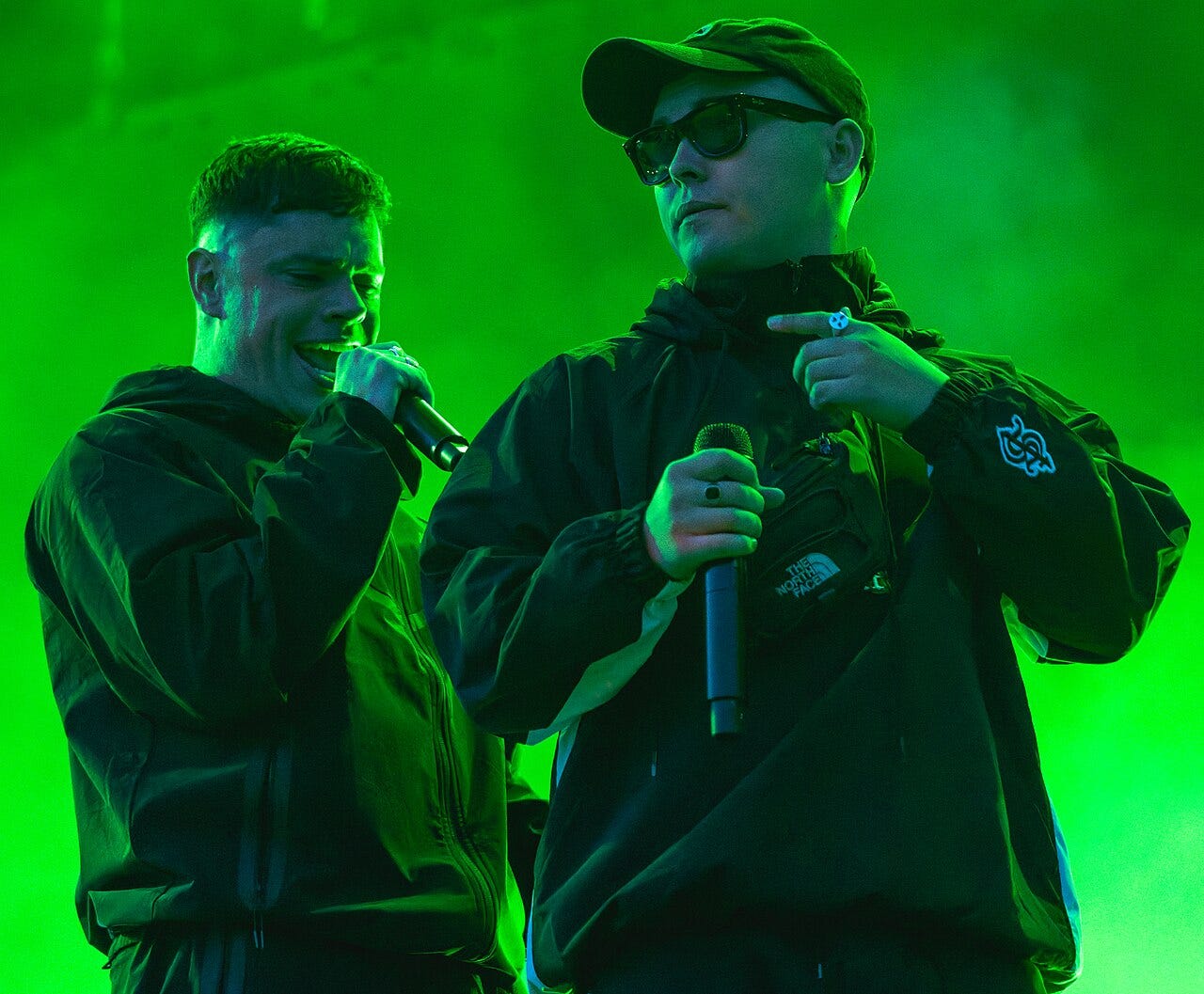
It’s hard to discuss the spread of Gaeilge without offering a mention to the tri-colour-balaclava-sporting Irish-language rap trio Kneecap, who first burst onto the music scene in 2018 with their debut studio album 3CAG, which, for the most part, was recorded and performed in Irish.
In 2024, their self-titled film became the first ever in Gaeilge to be featured at the Sundance festival. Since then, in a meteoric cultural rise, they have publicly clashed with Prime Minister Sir Keir Starmer over their uncompromising politicisation of Palestinian solidarity, been barred from entering Canada and faced six months of court proceedings.
The trio have carved a place for themselves in political discourse around the Troubles and Irish politics with a blend of on-the-nose satire and bold (sometimes brash) political statements. But it’s impossible to deny that throughout their time at the forefront of the cultural eye, they have championed the Irish language cause.
In July of last year, Kneecap rapper Liam Óg Ó hAnnaidh, who goes by the stage name ‘Mo Chara’ (meaning “My Friend” in Irish) made headlines (again) when he requested an Irish interpreter in court, whilst on trial for terror offences after allegedly displaying a Hezbollah flag on stage at a gig. The case was thrown out and the High Court rejected a CPS appeal for a new trial last week.
It was only earlier that year that the British government repealed a penal-era piece of legislation from 1738 that banned the use of the language in court. Until February 2025, speaking Irish in court in the UK was punishable with a £20 fine, a hangover from an imperial era where speaking Irish was equated with the revolutionary struggles of Irish nationalism across the water. Campaigners from Irish language groups had been lobbying the government for decades to repeal the law.

One such group, Conradh Na Gaeilge, meaning The Gaelic League, was set up in Ireland in 1893, in an attempt to withstand British suppression of the language and revive its everyday use. The group would host ‘Ciorcail chomhrá’ (talking circles), where only the Irish language could be used.
Across the sea in London, Irish immigrants: writers, activists and everyday folk took inspiration and set up a local branch in 1897. Due to the paranoid presumption of the British state that such groups were akin to IRA membership, they held their talking circles in secret.
The London branch secretary today, Orla Nic Con na Búille, said that the group’s consistent history and membership in London showed that the Irish language was very much alive here, and meant far more than just being a dialect. It was, and is, a political tool to promote Irish culture.
Conradh Na Gaeilge still hosts regular talking circles, including twice a month at the LIC, to “promote and protect” the language.
She said: “Gaeilge is our lineage, it’s our heritage, and it’s our culture too. It’s who we are as people and if we are the one generation that can’t keep it up, we are wiping out thousands of years of understanding of who we are, and that’s enough for me to want to protect it.”
For Órla, Kneecap’s contribution has been massive, but she’s also keen to stress that that is exactly what they’ve been, contributors to a wider, deeply embedded Irish language movement, and not the instigators. They are just the tip of a much larger, green iceberg.
She said: “Now, there’s still a long, long way to go, but yes, for sure, I do think they’ve had a really positive impact on the younger generation.There were a lot of moving parts that fit perfectly together at that time of the Kneecap movie.
“They were definitely a massive part of it, but I think campaign groups like Conrad Na Gailgae, policy-wise, have enacted a lot of change, they’ve campaigned for a lot of rights for Irish speakers for over a hundred years.”
She moved over to London from County Leitrim recently and is one of thousands of Irish immigrants who settle in London each year. Areas in north London like Camden Town and Kilburn have traditionally been where the Irish have settled, and maintained strong prevalent Irish communities. Kilburn was commonly referred to as the ‘33rd County’.
Whilst the migration patterns look a little different these days, and some have suggested the Irish connection in some of these areas is dwindling, the Irish influence in London lingers, kept alive by the existence of sport, music, the pubs and of course, the language.
Ms Dorothy said: “I think there’s something that’s really unique about Irish people, like Irish migration to London. The history means it’s embedded into the city. You don’t find the American centre in London. But we’ve got the London Irish Centre, and that just makes sense.
“Because even though we left, and a lot of people were kind of forced to leave to find opportunities, I think that leaves you with a really strong connection with home because we’re not resenting where we came from. We’re proud of our culture, and speaking the language is an active way to experience that cultural connection to home.”
The Irish language in London has come a long way.
During the Troubles, to be heard speaking it on the streets of London aroused suspicion of paramilitary involvement, a public attitude that mirrored historic policy. In the 1970s and 80s, Irish people’s place in London was more peripheral, and the language classes were protected due to the stigma.
But now, the Celtic Revival is in full swing, and demand for the language has never been higher.
There’s a phrase in the Irish language: ‘Bíonn blas ar an mbeagán’, which means ‘a little amounts to a lot’. It’s the daily work of activists and proponents of Gaeilge that have got the language to where it is now- and this is just the beginning, they say.
Finn Logue will be reporting for the Islington Tribune from Monday March 16. You can email him at flogue@islingtontribune.co.uk or contact him on 0207 419 9000.
Daisy Clague will be reporting for the Camden New Journal. You can reach her at dclague@camdennewjournal.co.uk